Even before I became a digital nomad for 8 years in 2014, my parents strongly (and without argument) urged me to have appropriate travel health insurance with international health cover, no matter how long or where the trip abroad was. And they were right.
Note: This article first appeared in German here.
Trigger Warning: There will be photos of wounds, but nothing too gory.
This post was sponsored and contains affiliate links (marked with an asterisk *). If you buy/book anything after clicking on them, this doesn’t cost you anything extra but gives me a little commission from qualifying purchases to help keep uploading free travel tips for you on to this blog.

I usually travel alone and especially if something goes wrong, I want to be covered. And I definitely had to use it often and it was just great when it was completely uncomplicated to go to the doctor or the hospital.
So here are my tips for health insurance when traveling.
As a note: This article does not constitute (medical or insurance) advice or completely comprehensive information. Please contact the provider directly for information about the respective conditions.
Difference between travel insurance and travel health insurance
As the name suggests, travel insurance deals with all the details related to your travel planning and execution. If you can no longer go on your trip, you could get (part of) your money back.
You could be entitled to reimbursement for luggage loss and theft as well as coverage for cases where you accidentally break something in the hotel room or injure someone.
Travel health insurance ensures that you are covered for medical reasons outside of Germany. This means that if you become ill, have an accident or need to be flown in for emergency medical treatment, your medical treatment will be paid for.
Some travel health insurers include some travel insurance coverage (also for an additional charge).


What international health insurances are there?
First of all, it is very important to know that there are different tariffs for different countries. Normally a visit to the USA or Canada costs extra.
Then it’s important to know how long you want to travel, whether for a long or short period of time and whether you’ll be coming home in between.
If you are traveling as a couple or with a family, there are also special insurance policies that cover everyone.
There are also annual tariffs that cover short trips of around 28 to 70 days and where you don’t have to worry about your insurance every time you travel.
What do you have to pay attention to when purchasing health insurance?
With all of these tariffs, it is of course a good idea to compare prices and covered services online. There are websites where you can look at different offers side by side and compare services.
So that you have a quick overview, here are the important criteria that you should consider when choosing travel health insurance:
Personal
- Depending on whether you are traveling alone or with others, insurance premiums may change
- Your age also plays a role. Prices change often after 40.
Medical Expense Coverage
- Are both outpatient and inpatient doctor visits and hospital stays covered?
- Which medications are covered? Find out specifically about your prescribed medications that you need to take with you. (Regardless of this, you must also check with your doctor and health department to see whether you can carry them with you without an official confirmation)
- Are emergency treatments such as emergency surgery covered?
Emergency repatriation
- Are you entitled to medical repatriation back to your home country?
- It’s unpleasant to think about: but repatriation in the event of death is important!
Coverage amount
- What is the maximum coverage of your medical expenses? It can be expensive in an emergency.
Scope
- Is your destination: included in the insurance? Some countries are not covered or require more expensive insurance.
- What exceptions and restrictions are there?
Term and extension options
- Is your destination: included in the insurance? Some countries are not covered or require more expensive insurance.
- What exceptions and restrictions are there?
Duration and extension
- Does the insurance cover your entire travel time? You can’t just take a shorter period of time to cover costs. As soon as you travel and leave your home country, the validity period must start.
- Are you flying with a one-way ticket, i.e. with an open end?
- Do you need monthly travel insurance that is longer than a regular holiday trip?
- Is there an extension option? If, planned or unplanned, you are away for longer than you stated in your insurance, you cannot always extend your stay.
Deductibles
- How much is your deductible? A lower or no deductible is more expensive. A higher deductible can lower the insurance premium, but then the costs in the event of damage will be much higher.
Additional services
- Travel cancellation insurance if you are unable to start your trip through no fault of your own
- Liability insurance for damage to third parties (e.g. accident or property damage)
- Luggage insurance against loss or theft of your luggage
Pre-existing illnesses
- Are your pre-existing conditions covered? Ask in advance whether and how and if they are
- Do you have to state these when submitting your application?
24 hour emergency number
- Should be normal, but is there a 24-hour hotline available worldwide?
- Are there any extra charges for the call?
Reviews and experiences of other travelers
- No matter how great the promises are. In the actual case of illness, the support and applications can look completely different. So take a good look at the customer reviews and customer satisfaction. Through experience reports and ratings you can find out more about the reliability and service of the insurer.

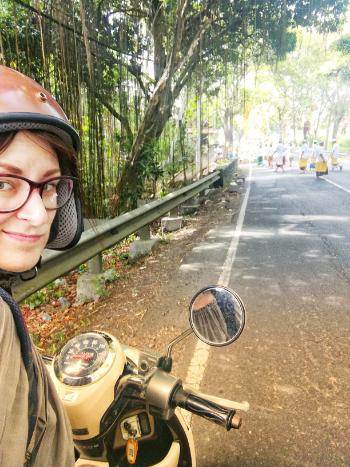

What does travel health insurance not cover?
That depends on the insurance provider. But in general, you are not insured in your home country.
That’s why you have your regular health insurance. It therefore only applies abroad and for unforeseen illnesses or emergencies, and therefore does not include preventative treatments or even necessarily the continuation of treatment for chronic illnesses.
Negligence or particularly dangerous actions, certain sports (especially for competitions) and even activities such as whitewater rafting are usually not covered.
Whether you can extend your insurance while you are already traveling is not always possible.
My recommendation: SafetyWing
Personally, I have always used the Norwegian company SafetyWing* as a provider for several years and am therefore also an affiliate.
(This means that if you take out your travel health insurance through my links, I will receive a commission. However, the price will remain unaffected for you.)
They offer travel insurance directly for digital nomads and long-term travelers, are subject to European laws, and include an incredible number of things that other travel insurers do not cover or only cover at an additional cost.
And especially if you’re taking a trip around the world with an open end (one-way ticket), then you can do it well with them because you can always extend it. It’s like a monthly travel insurance that you can adjust flexibly.
For example, they were super quick to include COVID treatments in their services. And they also offer insurance for entire teams when it comes to company trips.
Especially if you are active and adventurous, you have a good range of services covered, such as surfing, balloon or canoe trips.
You can see exactly what is covered here in a PDF. (Download starts automatically.)
Recently I was in a customer feedback discussion about a product that SafetyWing was currently developing. I find it exciting that they are developing an insurance that even includes loss of income, physiotherapy, dental insurance and all for a fair price, which you would have to pay anyway as a self-employed person in Germany if you are not with the KSK.
If you’re interested in insurance, click here.* To give you a price example: For just $56.28 (around 52.50€), you’ll be covered for four weeks of travel if you’re between 18 and 39 years old.
Do you need health insurance abroad?
I would say: definitely!
Because you never know what’s going to happen and even if you’re the healthiest person in the world, you still have no control over whether someone does something to you, whether you get into an accident, whether you can’t tolerate food, whether you… a disease-carrying mosquito bites and you pick something up.
How are you going to predict that you’ll get home completely in one piece?
Especially since some people mistakenly think that if you notice something that is suspicious, such as strange spots and redness on your skin, you should have it checked out by a doctor at home because Germany’s healthcare system is good. The mistake here is that doctors in Germany are familiar with German diseases. But not with those abroad. Of course, there are also doctors who specialize in motion sickness. However, local doctors in the country where you picked up your illness are specialized and trained to deal with the diseases that occur very frequently locally. This includes, for example, malaria.
Local doctors quickly recognize the symptoms and have the necessary resources available.
What’s more, you could potentially infect other people on the plane! And flying sick is incredibly unpleasant. I can’t recommend it.
Please be sensible and not negligent!
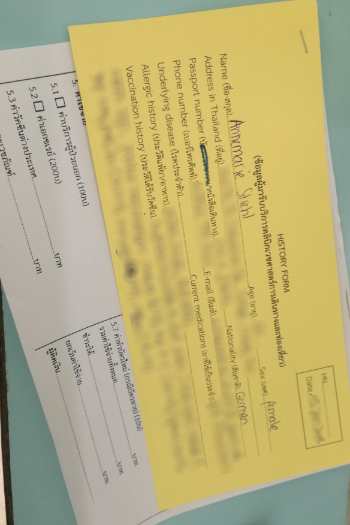


Travel health insurance for digital nomads
If you are traveling for a long time, you definitely need health insurance for abroad. This means you can travel flexibly, be insured wherever you are and be able to visit doctors for medication refreshers or travel vaccinations.
For example, if you are in Korea, it is relatively common to get a cold shot when the first cold symptoms appear. This is not common in Germany. But perhaps this is covered directly by your travel health insurance. An inquiry via hotline or email is a good idea.
Can you buy travel insurance while traveling?
Many travel insurance providers do not offer you the opportunity to extend or adjust your travel health insurance while you are already on the road.
You often have to buy the insurance before you start your trip, i.e. up to the day before your trip, and then definitely know when the trip is over. Travel time dates must be specified in advance.
Now you can do all of this online. This means you don’t need to make an on-site appointment with an insurance provider. I used to always do it that way. Now I take out my travel insurance online.
Here, too, I can only recommend SafetyWing, because you can also insure yourself during the trip in case you forget it or want to travel longer.
How is travel insurance coverage handled in the event of illness?
If you do become ill while traveling abroad and need to use your travel health insurance, it is important to follow a few steps to ensure you receive the best possible support and reimbursement.
Here is a general procedure to remember in case of an emergency:
1. Call the insurance emergency number:
- Contact your travel health insurance 24-hour emergency hotline immediately. You can find this number in your insurance documents or on the insurance website. Save it in your phone before your trip so you don’t have to search for it in a panic.
- Have your insurance number, personal information and current location ready.
- Ask if you can only see certain doctors and which ones they can give you in your area. Your insurer often has a database and website that lists medical facilities whose treatments are covered.
Seek first aid and medical care:
- Seek medical help immediately.
- In serious emergencies, call the local emergency number or go to the nearest emergency room. Here, too, I recommend saving the emergency numbers in your cell phone before your trip. For some places (like Bali) there is no central number.
- For less acute problems, see a local doctor or clinic.
Have insurance information ready:
- Bring your insurance documents and personal details with you and show them to the medical staff. These contain important billing information and contact information for your insurance company.
Clarify cost coverage:
- Clarify with the insurance company and the medical staff how the costs will be covered. Some insurance companies work directly with hospitals and cover the costs directly.
- However, in many cases you may have to pay the costs yourself on site and submit the bills to the insurance company later. This means: you could record the expenses directly in your account.
Store invoices and documentation:
- Collect all medical reports, prescriptions, bills and payment receipts. You need these documents for reimbursement from the insurance company.
- Keep them safe! I would also photograph them immediately and upload them to a secure cloud and submit them using an online form.
- Make sure all documents are detailed and in English (or another common language). If necessary, ask the staff for a copy in English.
Aftercare and return transport:
- If transport back to your home country is medically necessary, this will usually be organized by the insurance company. They will then coordinate your transport and medical care during transport.
- If necessary, the insurance company will also take care of follow-up care in your home country.
Request a refund:
- When you return, submit all the documents you have collected to your insurance company. This includes medical reports, bills and proof of payment.
- Make sure that you have completely filled out the insurance reimbursement form and enclosed all necessary documents. If something is missing, the refund will take much longer or your application could even be dropped. Better to do more than less!
Communication with the insurance company:
- If something is requested later or something is missing, respond to any questions quickly to speed up the reimbursement process.
This is the general process if you need to use your travel health insurance. The most important thing, in my opinion, is to call the hotline immediately. This will give you the next steps and you can also see for you where the best place to go is. The insurance company is also best placed to know where German-speaking doctors may be located.
Procedures and requirements may vary from insurance to insurance, so inform yourself before seeking medical attention unless it is life-threatening.

More about Safetywing
If you are interested in travel health insurance, then you should just take a look at the website and have your costs for travel health insurance calculated*.
There is a price calculator where you can enter how old you are, where you are flying to, whether you want to have your valuables insured and whether you also want to do adventure sports. The price will be shown to you directly and is specifically tailored to your provisional travel dates.
And as I said, you can also take out the insurance during your trip and easily extend it.
If you get sick and have to go to the doctor or hospital, your luggage is lost, something is stolen from you or you are injured during sporting activities, SafetyWing covers all of that.
If your flight is delayed by more than two hours, you are entitled to a free meal and accommodation.
In addition, if you travel for more than three months, you are allowed to return to your home country for up to thirty days and then simply continue traveling. Emergency medical treatment at home would also be covered here.
I think that’s good because travel insurance usually only applies to foreign countries and if you return, no matter how briefly, you won’t be covered. That’s why you theoretically have your health insurance at home. But if you travel for several months or years and officially deregister, you often also deregister your health insurance so that you don’t continue to pay in vain.
Then you would no longer be protected at home.
And having to complete a separate application for home and foreign insurance for every trip and every return trip is simply inconvenient, annoying and could also mean that you may not be taken back.
With Safety Wing this is no longer a problem at all. That’s why I think it’s so great. I don’t have to worry about it anymore.
Here is an example where I needed medical help abroad and Safetywing arranged it easily.
I had an accident in Bali where my entire leg was completely scratched and I had open wounds for ages (because the humidity is not conducive to wound healing and pharmacies don’t carry large plasters!).
The customer service didn’t restrict where I could get treatment and so I got to a friend’s doctor very quickly. As far as I can remember, I didn’t have to pay anything. This went directly through my insurance.
I also had a bad rash and went to the doctor again. It was also covered easily.
Conclusion
I don’t want to miss being covered for medical assistance and emergencies while traveling. Then it’s similar to just going to the doctor in Germany. I always find it terrible when I hear stories from foreign friends (like from the US) where the costs are just enormous. Or hear from friends who didn’t have insurance and then had a scooter accident and now have to pay forever.
Travel health insurance is not that expensive! Definitely cheaper than the regular one in Germany and in my opinion is essential.
If you want to take a look at SafetyWing, here is the insurance link again.*
More health travel tips for long-term trips
- What to look for when you have a dust allergy
- How to prep for other allergies when you travel
- The essential safety tips for solo travelling women
- My horror stories of accidents in Bali