

Formerly a knightly estate, the Castle Kochberg in central Germany promises a tranquil getaway, especially in the warmer months. Blooming meadows and orchards with buzzing bees interlaced with tiny, bubbling canals lakes and moats, it’s a beautiful lesser known Thuringian castle. Here’s how to plan your visit.
**** This post isn’t sponsored nor commissioned but may contain affiliate links, which are marked with a star (*). If you book anything from them, this doesn’t cost you anything but might give me a little commission to help keep this free blog full of more travel tips and me fuelled with chocolate to keep writing. As an Amazon Associate I earn from qualifying purchases. ****

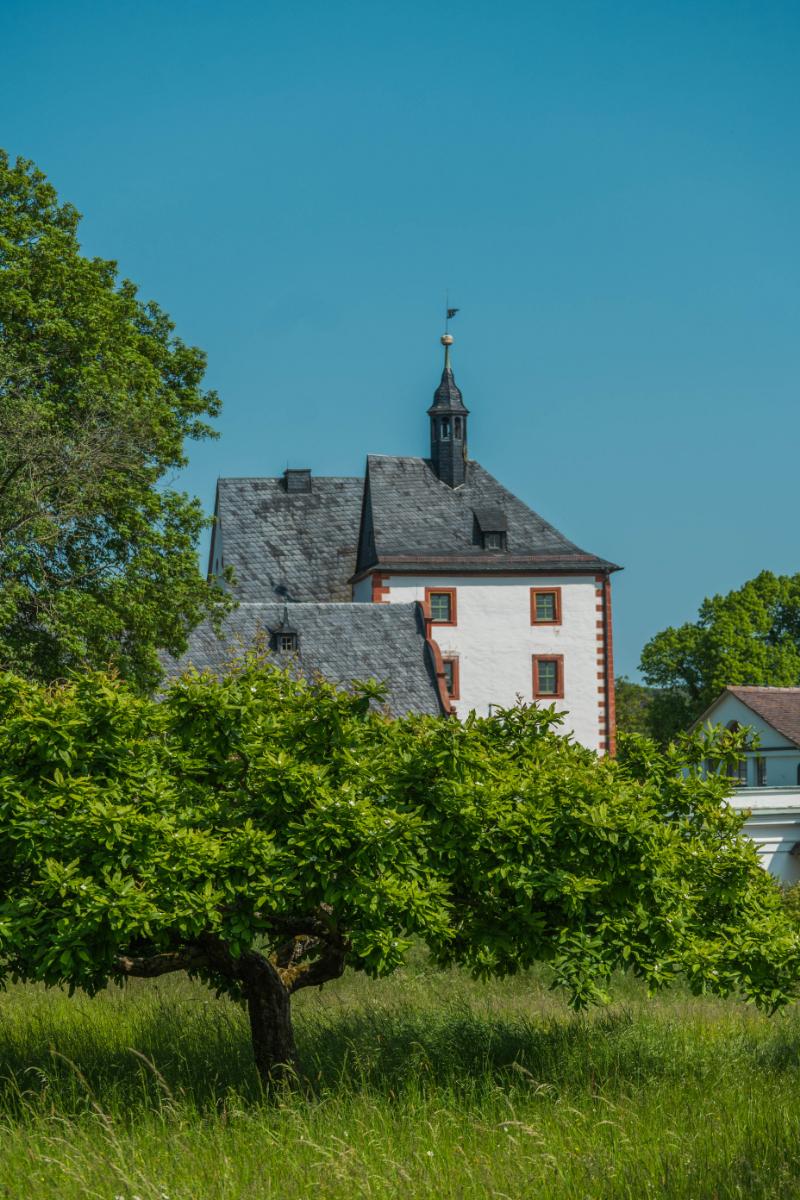
Where is Castle Kochberg and how do I get there?
The community of Großkochberg is located centrally in Thuringia, the central most state of Germany.
It’s a 40-minute ride from Jena (via the autobahn 4) and Erfurt (via country road L1052). There is no nearby train or big intercity bus station. You need a car to get there.
It’s wheelchair accessible and there’s a lift and accessible toilet.
Address: Schloss Kochberg in Großkochberg, 07407 Uhlstädt, Germany

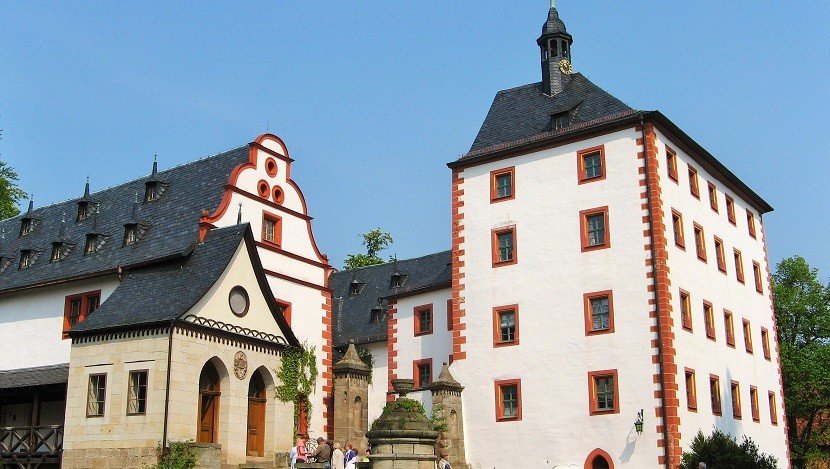
How do I pronounce Kochberg Castle?
The name is a bit tricky to pronounce. The phonetic script for the first syllable Koch is [kɔx]. Try the Scottish pronunciation of loch (no k sound) but starting with a C. The last syllable berg is pronounced similarly to the word berk.
Fun fact: In German, the castle is called Schloss Kochberg. It literally translates to Castle Cook Mountain, but that just refers to the local community of the same name.
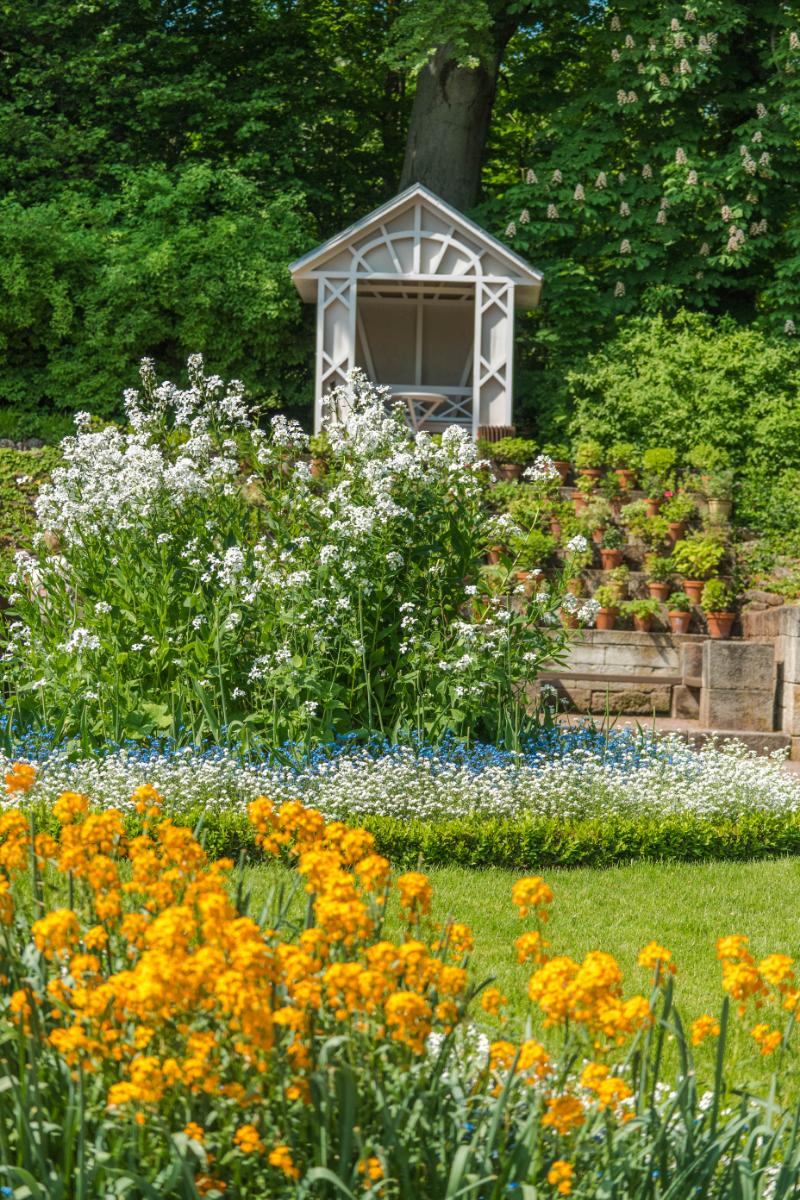
What makes Castle Kochberg special?
The castle in Großkochberg was first mentioned as part of a water castle in 1380, when only the main house had been built yet. At least from the 13th century onwards, a noble family had taken up residence and finally in 1733, Charlotte von Stein lived here.
That was also the reason for Wolfgang von Goethe’s frequent visits, which the castle is especially known for. Goethe is one of Germany’s most popular writers and Renaissance men. He wrote Faust, had his hand in colour theory and discovered the premaxillary bone.
In the local museum, you can learn more about their interesting and passionate love affair, including original letters and depictions. You can even see the writing desk which he used back then!
Rooms are decorated in the original historical style and there are information on the history of the Großkochberg castle and theatre.
The local parks and grounds are 6 hectares in total and have been reconstructed according to the original plans from 1869.
You can rent an audio guide. The museum and gardens are open year round.
What is there to see?
I’ve been to Kochberg Castle in Großkochberg dozens of times, it’s become somewhat of a family ritual to visit almost every year. We typically start by eating lunch (German dumplings with roulade and red cabbage!) at the castle restaurant.
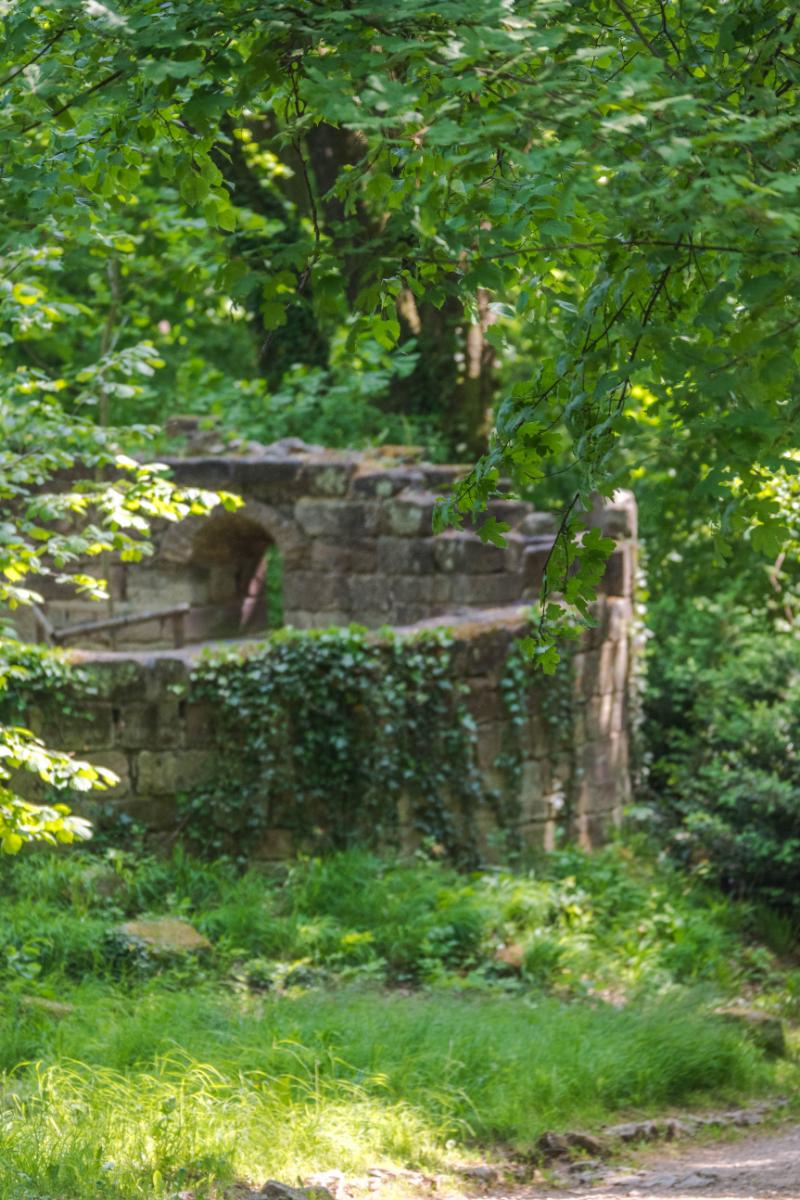
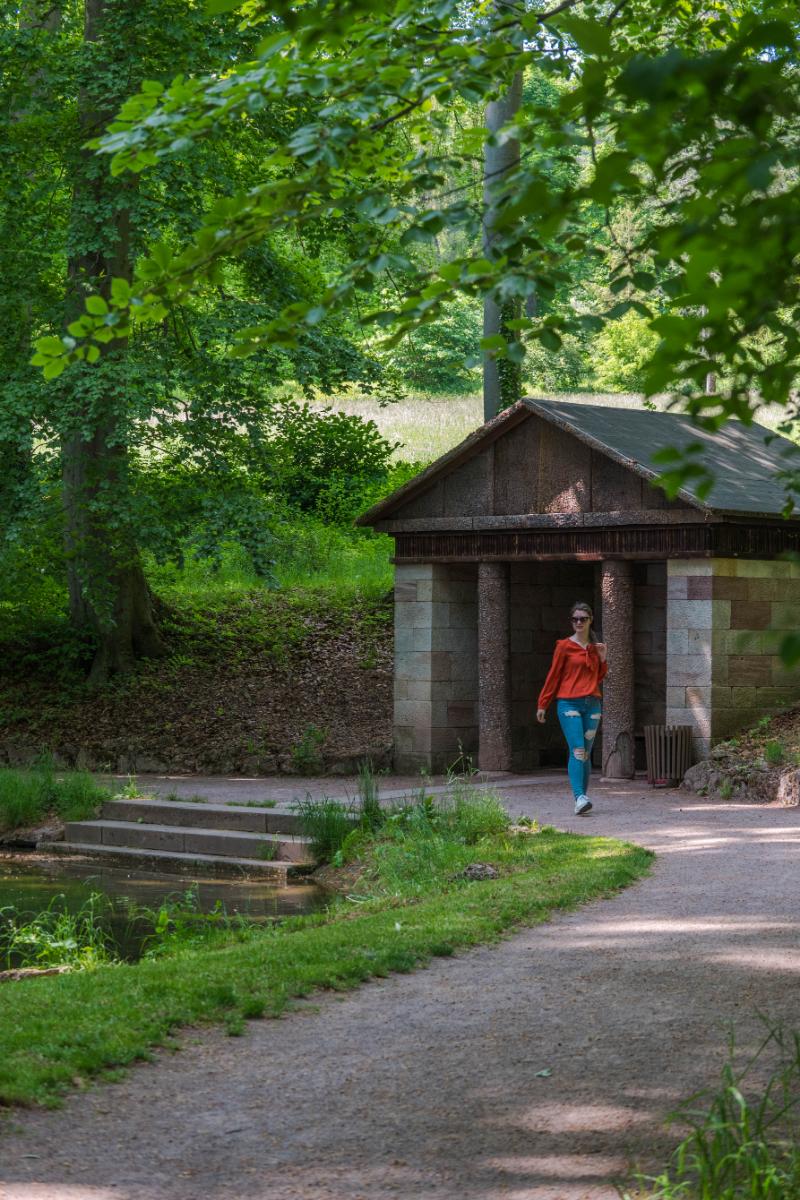
Then, we head into the smaller kitchen gardens and past the meadows and fruit trees into the forested area. There are beautiful little nooks, such as a small ornamental garden with pavilion or a fake tower ruin, a grotto with tomb as well as smaller ponds hidden in the park lands for you to explore.
You can easily sit here and rest awhile, read a book, etc. It’s always super quiet. The castle grounds are free to visit. If you want to enter the castle, you pay a small entrance fee (there’s a reduced price for seniors, students and teens).
Occasionally, there are events, such as plays, happening in the local theatre Liebhabertheater next to the castle.
On one day in December, there’s a special Christmas market happening – it’s one of the many castle Christmas markets in Thuringia that have a very limited run every year.
In late spring, I absolutely loved the many colourful flowers in the patches and gawking at the hundreds of tiny tadpoles in the castle moats. They were just so cute.
Tip: For more beautiful parks and gardens, check out the Japanese Garden in Bad Langensalza and the Chinese Garden in Weissensee. Both are only a little over an hour drive away.
More beautiful castles in Germany to visit
- 30 min away: Walk through a sea of spring snowflakes in March
- 40 min away: Jena in Thuringia has multiple castle ruins to see
- 45 min away: Gorgeous Baroque castle near Erfurt waits for your visit
- 1h away: Azalea garden and historic Tannenfeld Castle
- 1h away: Three castles from 3 eras in one spot
- 4.5h away: Did you know that Schwerin’s castle actually featured in fairy tale movies?