One of the coolest places in Germany I have come across is the artist village and sculpture garden of Plinz. It may look slightly haunted, but it’s really cool, utterly unique and artsy. I bet you have never heard of it. (I hadn’t until recently). So I want to share this local German travel secret with you. It’s a great destination if you are visiting Jena in Central Germany.
You can read the article in German here/Lies den Artikel auf Deutsch.
**** This post isn’t sponsored nor commissioned but contains affiliate links. If you buy/book anything after clicking on them, this doesn’t cost you anything but gives me a little commission from qualifying purchases to help keep uploading free travel tips for you on to this blog. ****

Where can you find the sculpture garden Plinz?
Look for the “Garten der Stille Plinz” when you are googling. It literally translates to Garden Of Stillness/Tranquility and is located in a community that isn’t even a village, it’s that small. There are only 5 houses as part of an overall farmstead belonging to the artist himself.
The village lies halfway between Jena and Kahla, two important towns in the central state of Germany, which is Thüringen (Thuringia in English). And both these places should be on your bucketlist for central Germany.
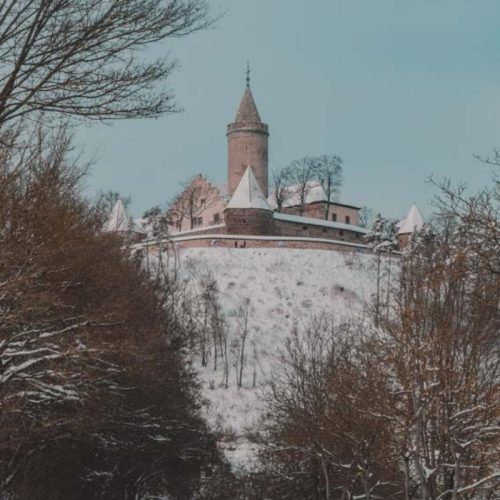
Some of the most scenic spots include the 7 Wonders of Jena, Leuchtenburg in Kahla, the wild orchid meadows in Leutratal and many impressive castles in Thuringia.
More travel tips are linked at the end of this article. (Scroll all the way down or click your way through from the articles listed in the paragraph above. I tried to make it as easy as possible to get from one cool central German sight to the next as possible.)


How to get there
Let me be upfront: There is no public transport to this place. You need to take a bus to Milda and then you have to walk an hour to get to Plinz. I mean, there are some scenic views along the way if you are keen to hike.
I’ve been told the “Plinzer Weide” (plinz willow tree) is a nice hiking point. And Thuringia is well known for hiking and hiking enthusiasts. There are some trails or you can walk alongside the countryroad. There shouldn’t really be traffic here anyway…
I do recommend driving here. But know in advance that it is not allowed to drive through Plinz as no cars or motorbikes are allowed. Which means you have kind of two evils to choose from. (Getting here is a bit of an adventure.)
Option 1 – Großkröbitz
Coming from Jena, you take the route to the north of Plinz, which I personally recommend because it’s a decent road. Drive through the village Großkröbitz and southwards to Plinz. There are signs that you cannot drive through, but that’s not true for visitors.
Option 2 – Altendorf-Altenberga
If you take the route south of Plinz, you drive through the villages of Altendorf-Altenberga, which are typical German villages in the style of the region.
However, after those, the road becomes less of a road and more of a dirt track with lots of pot holes. Big and muddy puddles after it rains. So beware! It’s really no fun driving here with a new car.


Good reasons to visit Plinz in Thuringia
If Plinz is in “the middle of nowhere”, is it worth a visit? With around 20 to 30 daily visitors between April and November, you can say that it is quite popular indeed! But you won’t find it in typical travel guides for the region. It really is a local secret.
So the first reason to visit is that it’s a local gem.
And second, you can see one of the most unique attractions in central Germany.
Third, it’s free to visit. (You can leave a little donation to help keep it intact and help its constant changes.)
Maybe you also love wild artistic expression and you aren’t opposed to the idea of it depicting naked people. That’s one thing you definitely should know before coming.
While the sculptures aren’t erotic in nature – more playful and just happening to not wear anything – it’s surely not suited for all tastes. Is it bad to visit with children? Not really.
There’s nothing rambunctious going on. Just the nude form of humans frolicking in the forest. And they are abstract enough to not feel too realistic.
And you should know nudity isn’t a strange concept in Germany. It’s much more common on TV, for instance, than you would find in the USA, for instance.
Plus, the owner’s daughter is currently working on plans to change the gardens and it will be changing soon.
The history of the Plinz Garden of Stillness
The artist Jochen Bach was a free thinker and wanted to be fiercely independent. So he and his wife quit their jobs as architects, bought land and settled down here in 1970s.
The farm houses were built and land worked on to be self sustaining. The husband’s free time was dedicated to painting and making sculptures and plastics, while the wife made pottery. In 2023, sadly Jochen Bach passed away at the age of 80. His wife is still residing in Plinz and the daughter, a Berlin photographer, is planning to move back and renovate the sculpture garden and exhibits.
Over the years the creations accumulated and a little art gallery was set up in the former historic mill building. To this day, it is open every day of the year for visitors (1-6pm). The garden with the sculptures is open year round as well. Both are free.
You can freely walk along the community street and garden and see sculptures left and right. They show lovey dovey couples, fairy tale creatures, fantastical figures, animals and more.
The garden has expanded so much over the years, it is separated into various themes, one of them being that of fairy tales.
You can see the Princess of the Pea sleeping soundly in a levitating bed. Then there are tons of frogs crashing a tea party.
And all of it is set amidst the tranquil and extremely picturesque scene of the little valley called Koppelgraben (“paddock ditch”).


There’s even a waterfall up ahead. And it’s the tallest natural fall in the state!
If you arrive here in spring or summer, you can see the handmade sculptures surrounded by flowers and lush plants. It is a garden after all.
The art gallery
If you dig the style and you want to take a one-of-a-kind souvenir home for yourself or a loved one, you can get them in the local art store/gallery. You cannot miss it.
Just walk to the centre of the community and you can see the entrance of the former mill. There are sculptures too.
Here are some contact details in case you want to ring up ahead of time. (Note that English may not be spoken.)
- Telephone: +493642222438
- Opening times: 1-6pm daily
- Fee: free
- Website (in German)
Sometimes they even host events, such as concerts and exhibitions here and there are plans to continue this. However, this isn’t happening currently.


Important to know
Besides the little hindrances of getting here, you should be aware that in Thuringia you can find ticks in nature. Not just in the woods, but also park meadows. We have quite a lot of them actually. And some of them carry lime disease and you really don’t ever want to catch that. So better stay on the paths.
While I do not want to scare you, I want to warn you of it.
Precautions locals take (because it’s normal to us and really not scary) is to wear long garments and closed shoes, which are necessary for hiking anyway. I can recommend getting these hikings boots* enough.
I’ve been wearing them almost daily for years and they are just so comfy and sturdy and braved all kinds of climates around the world with me. They are pricy but it pays off in not having to buy another pair for years. (You can see them in many of my travel photos from Australia, Thailand or the USA, for instance.)
Next, there are some insect repellants that you can apply. I recommend getting a German spray as local sprays tend to work best against local insects. (Learned this lesson in Australia and Thailand. The German stuff didn’t work so well there.)
My pick of choice is Antibrumm*.
To be prepared for when a tick strikes:
- Do not yank it out.
- Get yourself a slim tick tweezer* or a tick card* (the big tweezers* are generally quite terrible)
- Apply it as close to the skin as possible to not separate the head from the body
- Press to hold the tick and then turn anticlockwise to “unscrew” the parasite
- Get rid of it immediately – flush it away or actually glue it onto tape so it cannot crawl away again should it still live somehow (this also works if you catch it still crawling on you)
- Watch the bite over the next days. If it starts to become unusually red or you get white/red circles. Go see a local doctor immediately. Do not wait until you’re in your home country.
Your opinion
How do you like this travel recommendation? Have you ever heard of this hidden garden that stretches alongside a quiet little stream and extends beyond its boundaries in Plinz? Would you want to visit?
More Germany travel tips for you
- Different attractions in Jena depending on the month
- Fancy seeing a perfectly restored Baroque castle? Visit Molstorf Palace near Erfurt
- Why you should not neglect Gera (like its neighbours do)
- How come there are three Castles named Lobdeburg in one city and how you can see them
- Have you heard of these gorgeous cities in Germany?
- Why a Meissen Christmas market visit should be on your bucketlist
- Your guide for a one day trip in Dresden