

The best season to travel around Japan is in spring for sakura season. A popular tourist magnet is the former Japanese capital, Kyoto.
And if you want to make the most of your visit, here are the top 15 spots for seeing cherry blossoms in Kyoto, so you don’t miss out and know where to expect crowds.
Article also available in German.
This post isn’t sponsored nor commissioned but contains affiliate links (marked with an asterisk *). If you buy/book anything after clicking on them, this doesn’t cost you anything but gives me a little commission from qualifying purchases to help keep uploading free travel tips for you on to this blog.

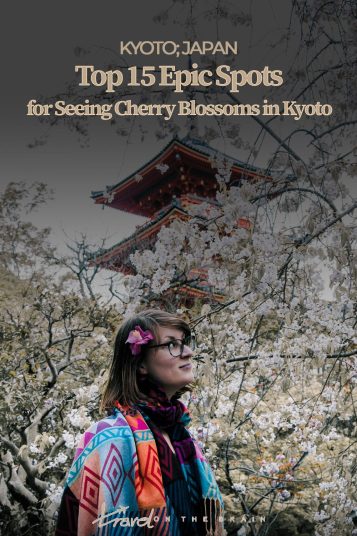
Why visit Kyoto for cherry blossom season?
The city’s historical significance, well preserved culture and old buildings as well as its over 1600 temples, the constant events and wonderful surrounding nature will ensure a fantastic visit. Kyoto used to be the capital and is steeped in significant historical and cultural sights.
Luckily, you can easily combine Kyoto sightseeing with the best spots for viewing cherry blossoms in Kyoto.
The city is pretty walkable and it’s easy to get around with public transport as well.
When does the sakura bloom in Kyoto?
Depending on the preceding winter and spring weather, the cherry trees might open mid March or up to the second week of April.
Always check the official sakura report, which is usually released in February. This way, you get accurate and timely predictions of when and where the cherry blossoms open around Kyoto.
So even if you already booked your trip and come to Kyoto when the cherry blossoms aren’t fully open, you can still take the train to other areas that have better chances of experiencing a magical hanami (cherry blossom viewing) experience.
For reference: In 2023, the prime cherry blossom opening times for Kyoto were from March 25 to April 2.
1. Philosopher’s Walk (哲学の道, Tetsugaku no michi)
Kyoto’s famous cherry blossom path can get seriously crowded but that’s due to its exceptional beauty.
Imagine a quietly bubbling stream in the canal below and a canopy of pink overhead for two kilometres (1.24 miles). You’ll walk along old stones next to green bushes and it feels really cosy.
You can start at the Silver Pavilion and then stroll into the neighborhood of Nanzenji.
If you start early, it can be the most relaxing walk ever. Otherwise, it can be rather crowded.
Completing the entire Philosopher’s Walk takes about half an hour and it’s definitely an experience that’s worth it.
You will definitely understand the pronounced love the Japanese have for their sakura.
- Address: Ginkakuji Temple (Silver Pavilion)
- Bus stop: Ginkakuji Templev (Silver Pavilion), Sky Hop Bus Kyoto Course
2. Arashiyama (嵐山)
After Gion, Arashiyama is the second most popular district in Kyoto. You can easily get there by train. If you have the JR Railpass*, you can use it.
It lies a little outside and you will feel like you are in rural Japan. You’ll love it! I certainly did. It’s one of the quaintest places in Kyoto, if you ask me.
Take a stroll along the cherry blossom tree lines river walks and walk up to Kameyama-koen Park, then head to the famous Bamboo Forest. It is such a popular photoshoot, I found it impossible to take a good photo by myself. But you can rent a professional photo session with an expert local here*.
You can also book a guided bike tour to the Bamboo Forest from Kyoto here*.
Near the train station, you can also admire the art project Kimono Forest.
However, while you are at the riverside, don’t miss out on stepping into the local shops. A lot of them offer special sakura themed foodie treats around this time of the year, and you can sample a lot of them. Don’t forget to try sakura mochi balls.
- Address: Ukyō-ku, Kyoto, Kyoto Prefecture
- Train station: Torokko Arashiyama station トロッコ嵐山駅
3. Maruyama Park (円山公園)
After strolling through the beautiful Gion district and maybe even attending the famous Miyako Odori geisha performances in April, you gotta head to Maruyama Park (Maruyama Kōen).
It is located in the Higashiyama district, close to some of Kyoto’s most famous attractions and historic sites, making it a convenient and picturesque place to enjoy the beauty of cherry blossoms.
Start at Yasaka Shrine (八坂神社) and then walk up to Chion-in (知恩院).
This Buddhist temple dates back to the 17th century and provides a wonderful experience of cherry blossoms in Kyoto.
The gravel paths are lined up with food and entertainment stalls during temple festivals. Blue picnic blankets are laid out underneath the cherry blossom trees and you can fully enjoy your day.
No wonder Maruyama Park is one of Kyoto’s most popular and well-known public parks, particularly during the cherry blossom (sakura) season.
How to get there:
- Address: Maruyamacho, Higashiyama Ward, Kyoto, Kyoto Prefecture 605-0071
- Bus stop: Gion 祇園(バス); bus lines 8 3 A, 8 5, 8 7, 8 8, 8 8 C
4. Kyoto Imperial Palace (京都御所)
The Kyoto Imperial Palace was once the ruling headquarters of Japan.
Sadly, it burnt down in 1855 but luckily was restored completely and can now be visited. You can freely walk around the Sento Palace grounds. It is basically like a public park.
The palace can be entered free of charge and there are multiple guided tours available.
However, if you want to book a guided tour that also includes entrance fees to Nijo Castle and its Ninomaru Goten Palace and the Painting Gallery, you can do here.*
To see the weeping cherry trees in Kyoto’s Imperial Palace, walk over to Konoe Pond in the Northwest corner of the park.
Besides the Imperial Palace and the Sento Palace grounds, a few other historic sites are located within Kyoto Imperial Park, including the Kaninnomiya Mansion, a former residence of court nobles that is open to the public in the park’s southwestern corner.
Not far away stands a small branch shrine of Miyajima’s famous Itsukushima Shrine on a small island of a pond. An iconic photo spot in Kyoto.
- Website
- Closed: Mondays and December 28th to January 4th
- Free English guided tours: 10am, 2pm Tues-Sun (~50mins)
- Address: 3 Kyotogyoen, Kamigyo Ward, Kyoto, Kyoto Prefecture 602-0881
How to get there:
- Subway stop: Karasuma Line; Imadegawa Station (5 min walk)
- Kyoto City Bus: Karasuma-Imadegawa bus stop (5 min walk)
- Keihan Railway: Demachiyanagi Station (20 min walk)
5. Kōdai-ji (高台寺)
Another nearby temple in Gion is Kōdai-ji. Its surrounding park is much smaller but it is rather quaint and possibly not as overcrowded.
On top of that, you can partake in a traditional tea ceremony* at the tea houses onsite.
The Kōdai Temple is a Zen Buddhist temple located in the Higashiyama district. Founded in 1606 by Toyotomi Hideyoshi’s widow, Nene, in his memory, it is celebrated for its serene beauty and historical significance.
The temple boasts a picturesque landscape with meticulously maintained gardens featuring stone bridges, moss-covered pathways, and a bamboo grove.
The stunning Hojo Garden is particularly renowned, providing breathtaking views of cherry blossoms in spring and vibrant foliage in autumn.
Kōdai-ji also houses several national treasures and cultural properties, including impressive artworks and artifacts that offer insights into Japan’s rich history.
The temple’s tranquility, combined with its historical and aesthetic treasures, make it a remarkable destination for visitors seeking a spiritual and cultural experience in Kyoto.
- Open hours: 9/10am to 5.30pm
- Admission: 600 yen (Kodaiji and Sho Museum), 900 yen (Kodaiji, Sho Museum and Entokuin), 500 yen (Entokuin only), 300 yen (Sho Museum only)
How to get there:
- Address: 〒605-0825 Kyōto-fu, 京都市東山区Higashiyama-ku, Shimokawarachō, 526−番地
- Higashiyama Yasui bus stop: bus 206 (5 min walk)
6. Kyoto Botanical Garden
This botanical garden is a true sight. Located right next to the the Kamo River, you expect more than 450 cherry blossom trees in full bloom.
The park dates back to 1924, making it the oldest and most comprehensive botanical garden in all of Japan. It spans approximately 240,000 ㎡ in total!
Its conservatory is one of the largest and most impressive in Japan as well with a height of 14.8 m (162 yards) and a total floor area of 4,700㎡ (5,621 square yards).
If you return to Kyoto in autumn, marvel at the deeply red maple trees.
Admission for adults is 200 yen and free for free for children, junior high school students, senior citizens (70 years and older), and the disabled. Parking is 800 yen.
- Website
- Address: Hangi-cho, Shimogamo, Sakyo-ku, Kyoto-shi 606-0823
How to get there:
- Kyoto City Subway: Kitayama Station (Exit 3)
- Kyoto City Bus: Shokubutsuen-mae bus stop; line 1 or any Kyoto Bus bound for “Shizuhara” or “Ichihara” (5 min walk)

7. Keage Incline
If you want to see Lake Biwa and Higashiyama, don’t miss out on the Keage Incline, another top local spot for Kyoto sakura sighting.
The inclined plane, framed by picturesque sakura trees, provides a unique backdrop for hanami enthusiasts. Visitors can stroll along the old rail path, taking in the scenic beauty of the cherry blossoms in full bloom, making it a delightful spot to experience Kyoto’s natural and industrial heritage.
This place is actually a former railway pass that stretches for 582 metres but has been discontinued. This historic site used to connect the Lake Biwa Canal to Kyoto’s industrial district.
When Kyoto’s cherry bloom is in full swing, the Keage Incline is definitely a popular visit for locals. At other times during the year, you can happily skip it.
How to get there:
- Address:〒605-0044 Kyoto Prefecture, Kyoto, Higashiyama Ward, 東小物座町339
- Keage station: exit 1 (9min walk)
- Directions
8. Daigoji (醍醐寺)
This Buddhist temple is a little outside of Kyoto but is such a marvellous example of Japanese gardening expertise and also includes a five-storey pagada, I had to include it. After all, it’s a place of both natural beauty and historical significance in Kyoto.
The origins of Daigoji are traced back to 874 when a Buddhist monk Shobo built a hermitage and soon discovered a well full of the spiritual water named Daigo. It’s a UNESCO World Heritage Site and one of Kyoto’s most significant cultural landmarks.
Today, Daigoji, is a renowned Buddhist temple complex with a history dating back over a millennium. and celebrated for its stunning architecture, serene gardens, and vibrant autumn foliage.
The temple site underwent plenty of reconstructions and additions over time but the religious principles developed here lead to the important Shingon school Ono branch.
The five-story pagoda and the Sanboin Garden are particular highlights. Reihokan Garden itself is free to visit. Entry to the upper grounds at Kami Daigo as well as the temple buildings requires purchase of admission tickets.
The temple is also famous for the annual Daigoji Temple Momiji (Maple) Festival, which attracts visitors to witness the breathtaking autumn colors.
- Website
- Opening times: 9am to 5pm daily
- Admission: 500-1500 yen (depending on season and museums)
How to get there:
- Address: 22 Daigohigashiōjichō, Fushimi-ku, Kyōto-shi, Kyōto-fu 601-1325
- Keihan bus: Daijoji-mae bus stop
- Kyoto City Subway: Daigo station
9. Okazaki Canal and Heian Shrine (平安神宮)
Did you know that Kyoto gets its water supply from Lake Biwa? The water is channelled via Lake Biwa Canal, of which Okazaki is part.
Why not plan your afternoon walk underneath the cherry blossoms in Kyoto’s Higashiyama district nearby the vermillion bridge and then cross over to see the Heian Shrine.
The Okazaki Canal is a picturesque waterway in Kyoto, Japan and is lined with cherry trees. In spring, it transforms into a captivating tunnel of sakura blossoms during spring.
The canal’s serene beauty makes it a popular spot for hanami (cherry blossom viewing) and leisurely walks.
Adjacent to the canal stands the Heian Shrine, a Shinto shrine constructed in 1895 to commemorate Kyoto’s 1,100th anniversary. The shrine boasts grand torii gates, vibrant gardens, and a replica of the Heian Palace.
Its annual Jidai Matsuri festival, featuring historical costume parades, is a fascinating testament to Kyoto’s rich heritage.
Both the canal and Heian Shrine offer visitors a harmonious blend of nature and cultural heritage in the heart of Kyoto.
- Website
- Admission: free for temple, 600 yen for Heian Shrine Garden
- Temple opening times: all year, 6am to 5/5.30/6pm depending on season
- Garden opening times: 8.30am to 5/5.30/4.30pm depending on season
How to get there:
- Address: 20 Shogoin Rengezocho, Sakyo Ward, Kyoto, Kyoto Prefecture 606-8357
- Kyoto City bus: number 5
- Kyoto metro: Higashiyama Station (10 min walk)
10. Ninna-Ji (仁和寺)
Another branch of the Shingon sect of Buddhism can be found at Ninna-Ji.
This time, though, it is the Omuro school. This temple dates back to 888 and was actually founded by the then retired emperor Uda, which lead to one member of the Imperial Family serving as Ninnaji‘s head priest over the course of several centuries.
This gave it the nickname Omuro Imperial Palace.
Nowadays, it is a World Heritage Site. Entering the Goten palace buildings costs 500 yen during cherry blossom season. At other times of the year, there is no admission to the grounds.
- Website
- Opening times: 9am to 5pm, all year
- Admission: 800 yen (Goten palace buildings), 500 yen (gardens during sakura season)
How to get there:
- Address: 33 Omuroouchi, Ukyō-ku, Kyoto, Kyoto Prefecture 616-8092
- Omuro Ninnaji Station: Keifuku Kitano Line
- JR bus: (covered by JR Pass*)
11. Kiya-machi Street (木屋町通, Kiyamachidōri)
Another small embankment in Kyoto for cherry blossom viewing is Kiya-machi Dori.
It is a vibrant street located in the heart of Kyoto and you’ll most likely pass it on your way to Gion district. This atmospheric thoroughfare runs parallel to the Kamogawa River and is famous for its bustling nightlife, featuring an array of restaurants, bars, and entertainment venues.
As this street is full of izakayas, traditional Japanese pubs, and restaurants, you can satisfy your appetite for delicious local Japanese cuisine as well.
Visit especially at night to see the stark contrast of ink blue sky and bright pink, illuminated cherry blossoms in Kyoto. You can easily spend an hour here.
Kiya-machi Dori provides a unique blend of contemporary urban energy and traditional Japanese culture, making it a must-visit destination for those seeking a lively and authentic Kyoto experience in spring time especially.
How to get there:
- No admission
- Address: Ishiyacho Zaimokucho Nakagyo-ku, Kyoto Prefecture 604-8002
- Kiyomizu-Gojō Station (2 min walk)
- Kyoto-Kawaramachi Station (4 min walk)
12. Hirano Shrine (平野神社)
Hirano Shrine is one of the larger shrine complexes of Kyoto.
As the shrine is located near Ritsumeikan University, be aware that you will find many student groups all over the area and it can get very crowded, particularly on weekends and during evenings. That shouldn’t stop you from a visit though.
Simply pick a free spot underneath the Kyoto sakura and enjoy the social aspect of hanami. During the spring, the shrine’s expansive grounds burst into a sea of pink and white as numerous sakura trees bloom, making it a prime spot for hanami (cherry blossom viewing) in Kyoto.
Speaking of festival, the actual celebration is held second Sunday in April at the mausoleum of Emperor Kazan, which leads to a procession in the afternoon.
Besides its natural beauty, the shrine features historic structures, offering a glimpse into Japan’s spiritual and cultural heritage. By the way, the Hirano Shrine has a rich history dating back to the 8th century.
How to get there:
- Address: 1 Hirano Miyamotocho, Kita, Kyoto, Kyoto Prefecture 603-8322
- City bus: line 5 1, stop Komatsubara Jido Koen mae (3 min walk)
13. Kiyomizu-dera (清水寺)
Another UNESCO World Heritage Site ist he fabulous Kiyomizu-dera. It’s essentially the most iconic photo site in Kyoto, which you will see for cherry blossom and red maple photos of Kyoto.
The name Kiyomizu-dera means “Pure Water Temple” because it was built at the Otowa Waterfall the eastern hills of Kyoto.
There are three different streams from the waterfalls and drinking from each of them is said to have specific health benefits. From the wooden stage that protrudes 13 metres (14 yards) above the hillside below, you have the best view over Kyoto’s sakura and maple trees.
Founded in 780 AD, it’s a UNESCO World Heritage Site and a testament to Japanese Buddhist architecture. The temple is renowned for its massive wooden stage that juts out from the main hall, offering panoramic views of the city and cherry blossoms in spring and vibrant foliage in autumn.
Kiyomizu-dera also houses several sacred artifacts and serene gardens. It’s a place where spirituality, natural beauty, and cultural heritage harmoniously converge, making it a must-visit destination if you want to explore Kyoto’s rich history and traditions.
- Website
- Opening times: 6am to 6pm, all year
- Admission: 400 yen
How to get there:
- Address: 294 Kiyomizu 1-chome, Higashiyama Ward, Kyoto, Kyoto Prefecture 605-0862
- Gojo-zaka or Kiyomizu-michi bus stop: bus 206 (10 min walk)
- Keihan Railway Line: Kiyomizu-Gojo Station (20 min walk)
14. Fushimi Inari-taisha (伏見稲荷大社)
This is THE must see shrine in Kyoto and not surprisingly, you can also find spectacular cherry blossoms at the shrine site.
Still, what Fushimi Inari is most famous for are its hundreds of red torii gates up and down Mount Inari. Fun fact: The writings on the pillars are actually just sponsors and ads.
Fushimi Inari Shrine is an iconic Shinto shrine known for its thousands of vermilion torii gates that create a mesmerizing path up the sacred Mount Inari. Founded in the 8th century, it’s dedicated to Inari, the Shinto god of rice and prosperity.
When you visit, be prepared for an uphill walk through a network of paths, passing under the countless torii gates at later stages, making it a unique and spiritual experience.
The shrine is a symbol of devotion, with thousands of smaller torii gates donated by individuals and businesses.
Fushimi Inari Shrine is not only a spiritual site but also offers breathtaking views of Kyoto and beautiful forested surroundings.
The combination of natural beauty, spiritual significance, and architectural splendor makes it a cherished and photogenic destination for travellers.
- Website
- Admission: free
- Opening times, 24/7, all year
How to get there:
- Address: 〒612-0882 Kyoto Prefecture, Kyoto, Fushimi-ku, Fukakusa Yabunouchicho, 68
- JR Inari Station: JR Nara Line
- Fushimi Inari Station: Keihan Main Line
15. Haradani-en Garden
In case you are into weeping cherries as apposed to the regular cherry blossom trees in Kyoto, then hit up Haradani-en Garden. Here, you can see a lot of them in one spot and Kinkakuji Temple is also close by.
If you are lucky, you can reach it with the rare bus M1. Otherwise, you can take the trains or rely on taxi or uber. Driving and parking here by yourself is not welcome.
Haradani-en Garden is a privately owned garden in the outskirts of Kyoto and covers 13,000 square meters.
It is a hidden gem known for its breathtaking seasonal beauty. This traditional Japanese garden is particularly celebrated for its stunning display of cherry blossoms in spring and vibrant maple leaves in autumn, which is when they have their viewing festivals as well.
The garden features meticulously designed paths, ponds, and teahouses, creating a tranquil oasis for visitors to explore and enjoy nature’s changing colours.
Haradani-en is not as well-known as some of Kyoto’s more famous gardens, which adds to its charm, providing a quieter and more intimate experience. If you are seeking a serene and picturesque escape, Haradani-en is the perfect getaway, offering a profound connection with the changing seasons in Japan.
Just be mindful when taking photos here as the clientele is mostly elderly and elaborate photo sessions are frowned upon.
- Website (in Japanese)
- Admission: 1200 yen (weekdays) or 1500 yen (weekends and public holidays)
- Not allowed: own food/drink, pets, tripods, monopods, blankets, wedding photo session
How to get there:
- Address: 36 Okitayamaharadaniinuicho, Kita, Kyoto, Kyoto Prefecture 603-8487
- No parking (only used for cabs)
- Kyoto City Bus: line M1, Haradani Noukyo-mae or Haradani bus stop (2 min walk), bus times here
- Subway Kitadaiji Station (10 min walk)
- JR Enmachi Station (10 min walk)
- Hankyu Railway: Saiin Station (15 min walk)
- cab stand at Kinkakuji Temple or Waratenjin-mae (5 min walk)
